
Introduction
Mithila Art, also called Madhubani painting, is a traditional and cultural art form that originated from the Mithila region of Bihar and Nepal. It is one of the oldest folk art traditions of India and is deeply connected with the culture and festivals of Mithila.
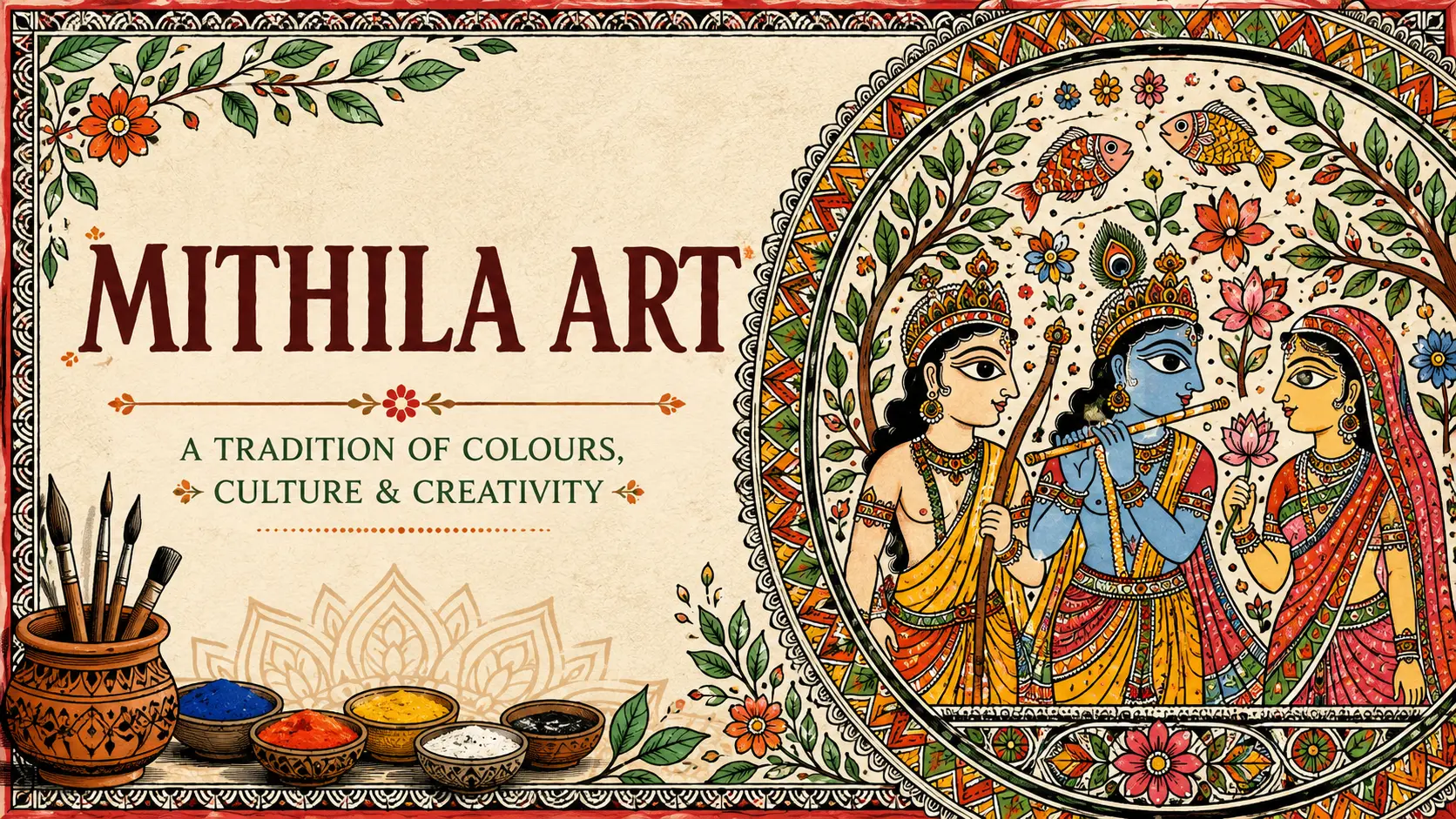
These paintings are famous for their fine line work, bright colours and traditional motifs based on nature, gods, festivals and daily life.
Traditional Way of Painting
Earlier, Mithila paintings were mostly done on mud walls of houses in villages during festivals and special occasions. Later, artists started using handmade paper, cotton cloth and silk fabric as a base material. Nowadays, canvas, cardboard and other modern materials are also used.
In old times, artists used handmade tools like bamboo twigs, matchsticks, fingers and small wooden sticks wrapped with cotton cloth for painting. Today, machine-made brushes and pens are commonly used, but many artists still prefer traditional methods.
Natural Colours Used
Traditionally, Mithila paintings used natural colours and dyes made from plants, flowers and minerals.
Some commonly used natural colours are:
- White – made from ground rice paste
- Blue – from indigo plant or aparajita flower
- Orange – from palash flower
- Red – from kusum flower, hibiscus or sandalwood
- Black – from charcoal or kajal
- Yellow – from turmeric
These natural colours gave the paintings a unique and earthy appearance.
Style of Mithila Art
Mithila Art is basically a two-dimensional style of painting filled with fine lines and decorative patterns. Two important styles used in this art are:
- Kachni – fine line drawing
- Bharni – filling colours inside designs
Most Mithila paintings do not leave empty spaces. Artists fill the entire surface with patterns, flowers, leaves, animals and symbolic designs.
Cultural Importance
Mithila paintings often represent themes from Hindu mythology, festivals and nature. Fish, birds, flowers and the sun are common symbols used in the paintings. Fish especially symbolizes prosperity, fertility and harmony between humans and nature.
Many paintings also show figures like Krishna, Subhadra and Balram, reflecting the spiritual and cultural traditions of Mithila.
Conclusion
Mithila Art is not just a painting style but an important part of Mithila’s cultural identity. Even today, artists continue to preserve this tradition by combining old techniques with modern materials.
This art form carries the stories, beliefs and creativity of generations, making it one of the most beautiful traditional arts of India.